Where should your business hold VAT funds to earn safe interest?
.jpeg)
Why VAT money matters more than you might think
Every VAT-registered UK business knows the drill: you collect VAT from your customers, hold onto it briefly, then pass it along to HMRC. But while you wait for your VAT payment date, that collected cash typically sits idle in a standard business account, earning little or no interest.
But what if your VAT funds could safely earn interest until the day they’re due?
Can I really earn interest on my business VAT funds?
Absolutely—provided you manage it safely and meet minimum deposit criteria. Many businesses leave these substantial sums in current accounts, missing out on potential earnings. Given today's higher interest rates, the cost of letting large amounts of cash sit unused has become significant.
DOS & Co.'s Cash Deposit Manager supports businesses with cash balances of at least £1 million. Initially, this minimum balance must be held for the first three months, after which there is no ongoing minimum requirement.
Isn't it risky to move VAT money around?
It can be if you don’t use the right accounts. Holding VAT funds in conventional bank accounts means risking exposure above the FSCS £85,000 protection limit. Spread your VAT pot across multiple banks, and you complicate your financial management immensely.
However, there is a safer, simpler option available.
The safest place for your VAT funds
Imagine placing your VAT cash in an account at the Bank of England, earning daily interest without exposure to any bank’s financial risks. It sounds ideal because it is.
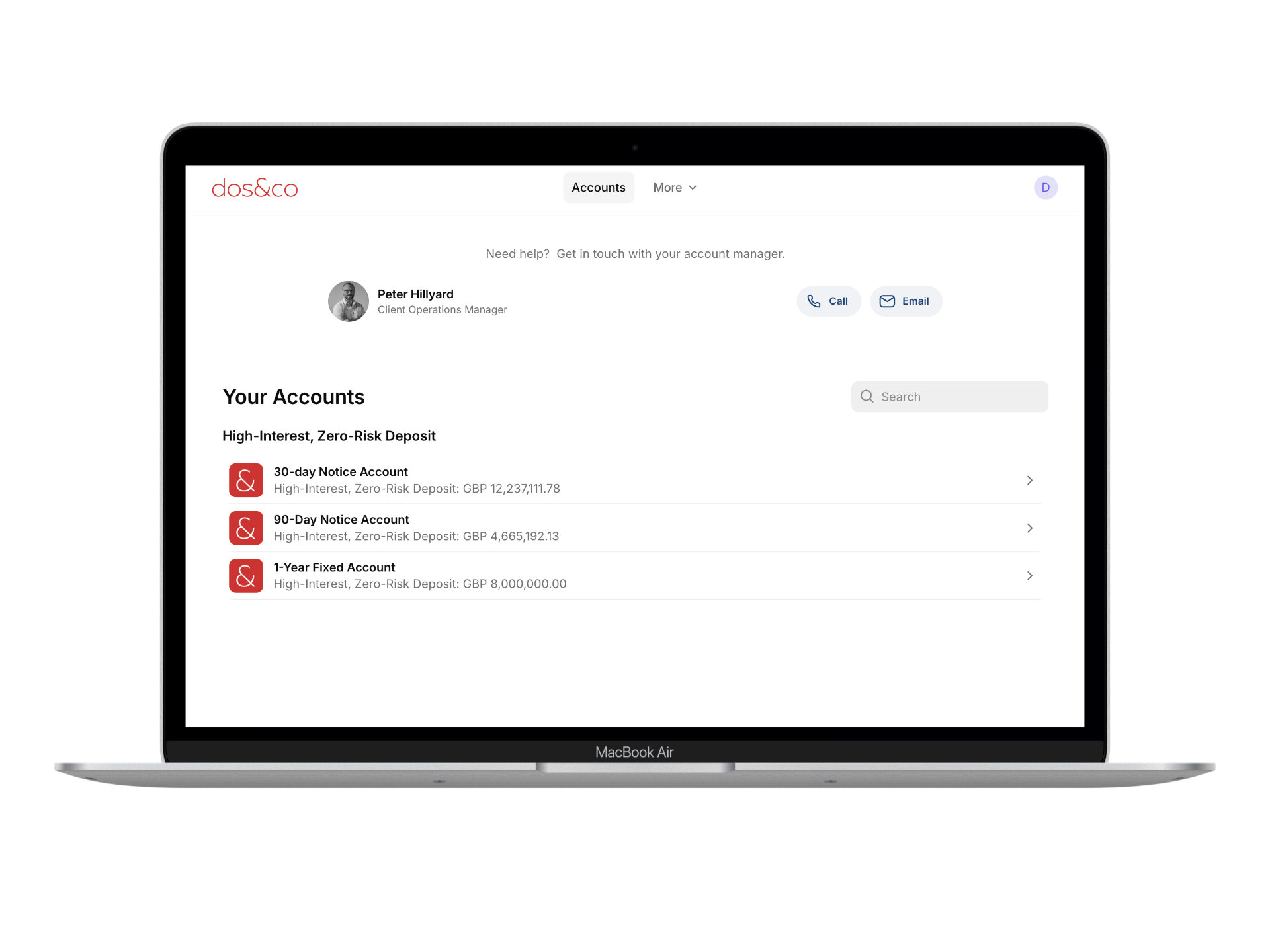
DOS & Co.’s Cash Deposit Manager enables UK businesses to place VAT funds securely and earn interest daily. Because deposits are held directly at the Bank of England, they’re completely risk-free and fully compliant with HMRC guidelines.
How much interest could you actually earn?
Let’s say your business typically holds around £1 million or more in cash, including VAT funds, for at least three months:
- Held in a standard business current account (interest typically <0.5%), earnings might be negligible.
- In a Cash Deposit Manager account (earning approximately 3.5%), that same amount could generate around £8,750 in safe, accessible interest over three months—£35,000 annually, with zero additional risk.
That’s real money directly improving your company's bottom line, simply by changing where you keep your VAT and other cash funds.
Won’t it complicate my business’s VAT reporting?
Not at all. Your VAT funds remain fully liquid and accessible when payments to HMRC are due. DOS & Co.’s platform is specifically designed to simplify the management of VAT money:
- Instant visibility of funds
- Simple transactions to and from HMRC
- Effortless record-keeping for compliance and auditing
Why isn’t everyone doing this already?
Most businesses don’t realise there’s a safe, straightforward way to maximise their earnings from VAT funds. But as interest rates remain high, the cost of not optimising these large cash balances grows significantly.
The bottom line: Make your VAT cash work for you
Holding your VAT funds in a zero-risk, interest-generating account doesn’t just make good financial sense—it’s also easy, secure, and fully compliant.
If your business holds significant cash balances of at least £1 million awaiting VAT payments or other obligations, now is the ideal time to start earning substantial, safe returns.
Next steps...
Want to see exactly how much interest your business could earn? Visit DOS & Co.’s interest calculator or contact our team directly. We’ll help you turn your idle VAT funds into income today.